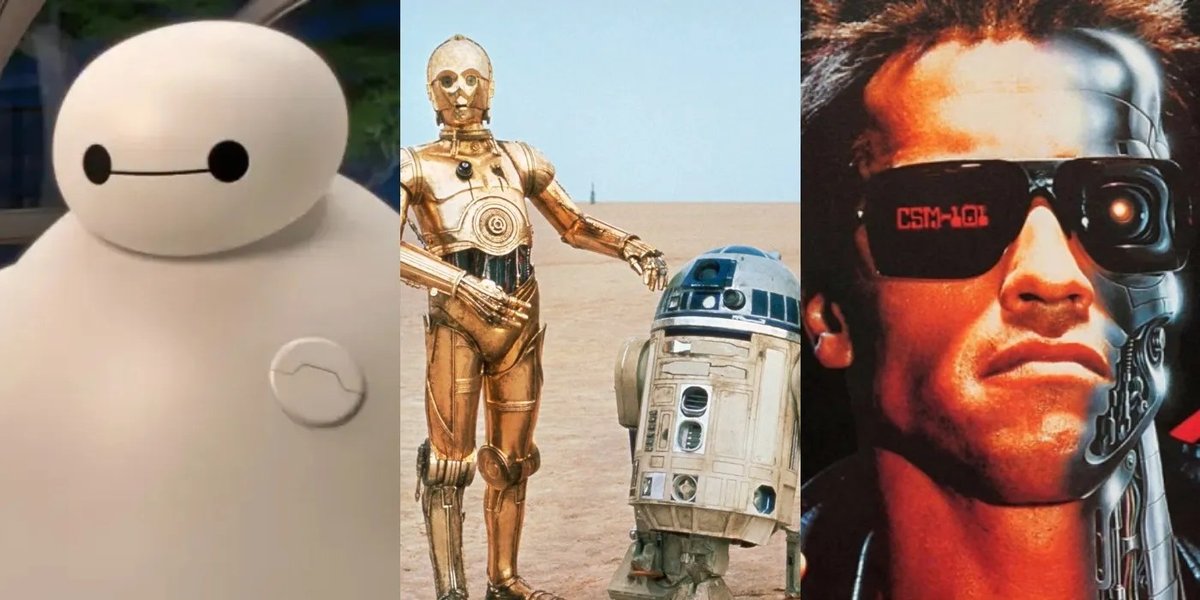
From the moment we first whispered the word "robot," born from Karel Čapek's 1920 play R.U.R. (Rossum's Universal Robots), humanity has been fascinated by the idea of artificial life. What began as a term for synthetic laborers (derived from the Czech "robota," meaning forced labor) quickly evolved into a canvas for our deepest hopes and fears about technology. And as these metallic, plastic, or even flesh-like creations have sprung to life in our imaginations, they've needed names – monikers that define their purpose, personality, or even their chilling lack thereof. Diving into the rich tapestry of fiction and media, we uncover a fascinating evolution of iconic robot names, each reflecting the era and the stories they inhabit.
At a Glance: Key Takeaways
- The term "robot" originates from Karel Čapek's 1920 play R.U.R., quickly followed by named characters like Marius and Radius.
- Early robot names often reflected human characteristics or mechanical functions, evolving from mythical automatons to sophisticated androids.
- Literary giants like Isaac Asimov and Douglas Adams popularized robots with distinct personalities and naming conventions, such as R. Daneel Olivaw and Marvin.
- Film and television introduced household names like C-3PO, R2-D2, Robby the Robot, and Bender, shaping our collective image of artificial intelligence.
- In comics and video games, robot names range from descriptive (Metal Men, Sentinels) to enigmatic (GLaDOS, 2B), showcasing vast creative diversity.
- The evolution of robot names mirrors our changing relationship with technology – from fearful slaves to cherished companions and formidable foes.
The Dawn of the Automated: From Myth to the Modern Robot
Long before the word "robot" even existed, humans pondered artificial life. Ancient myths and legends are rife with tales of animated statues and mechanical men, laying the groundwork for the named automatons we know today.
Pre-Čapek Progenitors: When "Robot" Was Just an Idea
Think of the woman forged from gold in Finnish myth The Kalevala, or the moving golden statues crafted by Hephaestus in Homer's Iliad. Plato and Pliny described talking bronze heads, while the Pygmalion myth gave us Galatea, an ivory sculpture brought to life. These weren't "robots" in the modern sense, but their very existence in human storytelling demonstrated an early desire to name and categorize artificial beings.
Later, in the 5th-century BCE Chinese text Liezi, we encounter an incredibly detailed humanoid machine made of artificial organs – a singing, dancing marvel. Skip ahead to the Roman Empire, and you have Talos, a bronze giant guarding Crete. The Golem, an animated man of clay from 16th-century Jewish folklore, is another powerful example, often brought to life by specific inscriptions or a sacred name. These figures, though unnamed by their creators in some instances, held immense symbolic weight, often mirroring human flaws or desires.
By the 19th century, this fascination evolved into more complex mechanical constructs. E.T.A. Hoffmann's Der Sandmann (1814) introduced Olimpia, a captivating (and ultimately unsettling) automaton. Mary Shelley's unnamed creation in Frankenstein (1818) became a cautionary tale about artificial life, famously known only by his creator's name. Then came Auguste Villiers de l'Isle-Adam's The Future Eve (1880), which not only featured Hadaly, a perfect artificial woman, but also popularized the term "android," setting the stage for future naming conventions.
Karel Čapek's Legacy: Where the "Robot" Name Took Hold
It all changed in 1920 with Karel Čapek's play R.U.R. (Rossum's Universal Robots). This seminal work didn't just introduce the word "robot" to the world; it gave us some of the first truly named robots. Characters like Marius, Sulla, Radius, Primus, Helena, and Damon weren't just nameless machines; they were individuals, albeit manufactured ones, grappling with identity and rebellion. Čapek's work depicted a world where these artificial beings performed forced labor ("robota"), eventually leading to a dramatic machine takeover, solidifying the robot's place in our collective consciousness as both servant and potential threat. More recently, the musical Maybe Happy Ending (2024) features the endearing retired humanoid helper-bots, Oliver and Claire, demonstrating a softer side to robot nomenclature.
Literary Landscapes: Giving Voice to the Artificial
Literature has been a crucial incubator for robot names, allowing authors to explore the philosophical implications of artificial life through characters with distinct identities.
From Clockwork Contraptions to Cosmic Companions
The 19th century saw figures like Olimpia, the automaton in E.T.A. Hoffmann's Der Sandmann (1814), and Hadaly in Villiers de l'Isle-Adam's The Future Eve (1880), whose very name hinted at the human-like form ("andr-" meaning man). Even H.G. Wells' The War of the Worlds (1897) featured unnamed Martian robot tripods, proving that even a description could conjure an iconic image.
But it was Isaac Asimov who truly cemented the robot's place in modern literature and influenced how we think about their names. His I, Robot series (1940-1950) introduced the Three Laws of Robotics and a host of memorable characters like Robbie, a compassionate nursemaid robot; Speedy, who struggles with a logical paradox; and Cutie (full designation: QT-1), a robot who questions his own creation. Asimov continued this legacy with the unforgettable detective R. Daneel Olivaw in The Caves of Steel (1954), a name that perfectly blends a human surname with a more functional initial designation. Later, in The Bicentennial Man (1976), he gave us Andrew Martin, a robot striving for humanity, a name chosen for its quintessential human simplicity.
Parallel to Asimov's influence, Osamu Tezuka's Astro Boy manga (1952) presented a heartwarming atomic-powered robot boy, whose name, Astro Boy (or Atom in Japan), immediately conveys his origin and youthful spirit. Ray Bradbury's chilling Fahrenheit 451 (1953) gave us the Mechanical Hound, a fearsome, unnamed but distinct mechanical hunter. Philip K. Dick's Do Androids Dream of Electric Sheep? (1968) introduced "replicants" with names like Roy Batty, Pris, and Rachael, whose human-like names masked their artificial nature and existential struggles.
Douglas Adams' The Hitchhiker's Guide to the Galaxy (1979) brought us perhaps one of the most beloved and exasperating robots: Marvin the Paranoid Android, whose name perfectly encapsulates his perpetually depressed disposition. In later literature, Rudy Rucker's Ware Tetralogy (1982-2000) featured the Boppers, Moon-based robots achieving independence, and Terry Pratchett's Discworld novels (1997) presented golems like Dorfl, conceived with Asimovian robot logic. Most recently, Kazuo Ishiguro's Klara and the Sun (2021) captivated readers with Klara, an Artificial Friend whose simple, gentle name belies her profound observations on humanity.
Aural Adventures & Melodic Machines: Robots in Sound
Robots haven't just dominated visual media; their distinct personalities and narratives have resonated across radio waves and musical scores, often influencing how their names are perceived.
Radio's Resonating Androids
Before television screens, the magic of radio brought robots to life purely through sound. Marvin the Paranoid Android initially debuted in The Hitchhiker's Guide to the Galaxy BBC radio series (1978–1980), proving that even a voice and a name could paint a vivid picture of a character's melancholic existence. Other notable radio robots include Tidy, George, and Fagor from the Earthsearch BBC radio series (1980–1981), demonstrating a range of human-like and functional designations.
Music's Mechanical Muses
Music has also played its part in canonizing robot names. Offenbach's The Tales of Hoffmann (1881) featured Olympia, a mechanical doll whose operatic presence made her an early icon. In more modern popular music, Connie Francis' "Robot Man" (1960) and Styx's "Mr. Roboto" (1983) brought generic robot personas into mainstream consciousness. Jeff Wayne's Musical Version of the War of the Worlds (1978) vividly depicted Martian Killing Machines, giving a terrifying descriptor to his mechanical invaders. Later, Janelle Monáe's "Metropolis" concept series (2007) centered on Cindi Mayweather, an android whose name evoked a blend of human familiarity and futuristic elegance. Gorillaz introduced Cyborg Noodle (2010), a literal fusion of human and machine reflected in her name.
Silver Screen Sentinels: Robots of Film
Film has arguably done more than any other medium to popularize and visualize iconic robot names, transforming abstract concepts into unforgettable cinematic presences.
From Silent Sentinels to Sci-Fi Stardom
Early cinema offered glimpses of mechanical beings, such as The Mechanical Dummy in A Clever Dummy (1917) and The Automaton in The Master Mystery (1918). But it was Fritz Lang's visionary Metropolis (1927) that truly made an impact with Maria/Futura, the Maschinenmensch (Machine-Human) – a groundbreaking robotic gynoid whose sleek design and dual identity became an enduring symbol.
The 1950s ushered in a new era. The Day the Earth Stood Still (1951) introduced Gort, a towering, silent, and incredibly powerful alien robot whose name became synonymous with unstoppable force. Just five years later, Forbidden Planet (1956) gave us Robby the Robot, whose distinctive dome head and vocoder voice made him an instant star. Robby was so iconic he reappeared in several other films and TV shows, becoming a recognizable face of fictional robotics.
The 1970s saw the chilling The Gunslinger in Westworld (1973), an android expertly played by Yul Brynner. But it was Star Wars (1976 onwards) that truly revolutionized robot iconography with C-3PO and R2-D2. These droids, with their alphanumeric designations, became beloved characters, proving that names don't need to be overtly human to forge deep connections with audiences. Alien (1979) then introduced the duplicitous android Ash, a name that disguised his mechanical nature until a shocking reveal.
The Age of Terminators and Beyond
The 1980s continued the robot boom. Roy Batty and Rachael returned to the screen in Blade Runner (1982), their human names and appearances blurring the lines of what it meant to be artificial. James Cameron's The Terminator (1984) introduced the terrifying T-800, a designation that evoked military precision and cold efficiency, later followed by other models like the T-1000 and T-X. Johnny 5, the endearing robot from Short Circuit (1986), showed the capacity for robots to be whimsical and sentient, while ED-209 in RoboCop (1987) presented a darkly humorous, heavily armed enforcement bot.
Animated films brought their own charm. The Iron Giant (1999) gave us a colossal but gentle hero simply named The Iron Giant. That same year, the cinematic adaptation of The Bicentennial Man brought Asimov's Andrew Martin to life. Steven Spielberg's A.I. Artificial Intelligence (2001) tugged at heartstrings with the child android David, programmed to love. Sonny, the empathetic robot from I, Robot (2004), explored the nuances of free will within Asimov's universe.
Pixar's WALL-E (2008) introduced a new generation to the adorable waste-collecting robot WALL-E (Waste Allocation Load Lifter – Earth-Class), his sleek companion EVE (Extra-terrestrial Vegetation Evaluator), and the menacing autopilot AUTO. More recent films feature David 8 (Prometheus, 2012) and Walter One (Alien: Covenant, 2017), both played by Michael Fassbender, showcasing advanced androids with complex motivations. Pacific Rim (2013) thrilled audiences with the colossal Jaegers, man-made war machines with epic, often mythological names. Baymax (Big Hero 6, 2014), TARS and CASE (Interstellar, 2014), Ava and Kyoko (Ex Machina, 2015), and CHAPPiE (CHAPPiE, 2015) continued to diversify robot portrayals, with CHAPPiE notably being the first robot in film with the ability to truly think and feel. The 2023 horror film M3GAN introduced M3GAN, an android companion whose alphanumeric-turned-name felt eerily contemporary.
Television Titans: Home Screen Heroes and Villains
The small screen has been a fertile ground for developing robot characters over extended periods, allowing their names and personalities to become deeply ingrained in pop culture.
Classic Companions and Cybernetic Antagonists
Television brought us some of the earliest and most beloved robot companions. Rosie the Maid from The Jetsons (1962) epitomized the helpful household robot, while Robot B-9 was a main character in Lost in Space (1965-1969), recognized by his catchphrase, "Danger, Will Robinson!" K9, the Doctor's robot dog, became a long-running and iconic companion in Doctor Who (1970-1980), his name a clever phonetic play.
On the darker side, the Cylons were central antagonists in the original Battlestar Galactica (1978-1979), a terrifying, faceless mechanical army. The 2004 reboot transformed the Cylons into sophisticated humanoid forms and nanobots, giving them distinct models and personalities, deepening their menace. The 1980s also gave us sentient cars: KITT (Knight Industries Two Thousand) and its evil counterpart KARR (Knight Automated Roving Robot) from Knight Rider (1982-1986), names that cleverly used acronyms to convey advanced technology.
Exploring Humanity: From Starfleet to Futurama
Star Trek: The Next Generation (1987-1994) delved deep into artificial intelligence with the androids Data, Lore, and Lal. Data's journey to understand humanity, Lore's malevolent intelligence, and Lal's brief but poignant life explored complex themes of sentience and personhood, each name carrying weight in their narrative. The British sci-fi comedy Red Dwarf (1988) offered a more humorous take with the sardonic humanoid mechanoid Kryten, the demanding Talkie Toaster, and the utilitarian Skutters.
The Power Rangers franchise (1993-) introduced Alpha 5, the quirky, helpful robot assistant, and various Megazords, giant combined robots whose names conveyed their immense power. Evangelions (EVAs) were featured in Neon Genesis Evangelion (1995-1996), mecha piloted by humans that blurred the lines between machine and organic. The Buffybot in Buffy the Vampire Slayer (1997-2003) explored themes of grief and replacement through a robotic duplicate.
Futurama (1999) became a veritable playground for robot names, most notably the hedonistic Bender (Bender Bending Rodriguez), his more responsible doppelgänger Flexo, and the melodramatic acting unit Calculon. These names perfectly captured their exaggerated personalities. Jenny Wakeman / XJ-9 starred in My Life as a Teenage Robot (1999, 2003-2009), her dual name highlighting her struggle between being a typical teenager and a powerful robot. More recently, TV series have featured Dorian from Almost Human (2013-2014), an android with surprising humanity, and Demerzel from Foundation (2021-), a centuries-old android with a critical role in shaping galactic history.
Comic Book Constructs: Panels of Power & Personality
Both American and international comics have provided an immense canvas for creating iconic robot names, often imbued with incredible powers, complex backstories, and distinct visual identities.
The DC Universe's Mechanical Marvels
DC Comics boasts a rich roster of robotic and android characters. Amazo is a power-replicating android whose name hints at his amazing abilities. Brainiac is a robotic alien or rogue AI, his name immediately suggesting vast intellect. Computo is another rogue AI, while Kelex serves as Superman's loyal robotic assistant, a more functional designation. The Manhunters are a rebellious robotic peacekeeping force, their name echoing their original purpose. The Metal Men are a unique team of sentient robots, each named after the element they are made from (e.g., Gold, Iron, Lead). Red Tornado is an android with powerful wind manipulation, and Tomorrow Woman is an android who defies her programming to become a hero. These names often describe their function, form, or ultimate destiny.
Marvel's Synthetic Saga
Marvel Comics has perhaps one of the most compelling and intricate histories of artificial life. Ultron, created by Hank Pym, is a major villain whose name evokes a sense of ultimate, destructive power. His creation, Vision, is a sentient android who famously joined the Avengers, his name reflecting his unique form and perception. The Sentinels are terrifying mutant-hunting robots, their name denoting their purpose as guardians (or oppressors). The Human Torch, an android with pyrokinetic abilities, was one of Marvel's earliest heroes.
Other notable Marvel robots include Jocasta, Ultron's wife who rebelled; Machine Man, a sentient robot detective; Danger, the sentient training facility of the X-Men; the Awesome Android, a power-replicating being; H.E.R.B.I.E., the Fantastic Four's adorable sidekick; and various Doombots, robotic replicas of Doctor Doom. Albert & Elsie-Dee are unique Wolverine allies, and the Spider-Slayers are a line of robots designed to hunt Spider-Man. Each name, whether simple, descriptive, or menacing, contributes to Marvel's expansive robotic lore.
Beyond the Big Two: Indie Icons and Manga Mecha
Beyond the major American publishers, other comics have made their mark. Fugitoid is a memorable robot character from Teenage Mutant Ninja Turtles. Scud: The Disposable Assassin centers on self-destructing vending machine robots, their name a darkly humorous descriptor. Robotman is a long-running comic strip character.
Japanese manga, in particular, has a rich tradition of robots. Giant Robo (1967–1968) introduced a colossal piloted robot. Doraemon (1969), the robotic cat from the future, became a cultural phenomenon, his name endearing and memorable. Arale Norimaki from Dr. Slump (1980–1984) is a super-strong, naive robot girl. The Androids from Dragon Ball (1984–1995), particularly Androids 17 and 18, became formidable antagonists. Masamune Shirow's Ghost in the Shell (1991) explored advanced AI with Project 2501, an espionage AI achieving sentience, while Chobits (2001–2002) featured the adorable humanoid personal computers known as Persocoms, their names reflecting their role.
Digital Drones & Gaming Gladiators: Robots in Video Games
Video games offer an interactive dimension to robot characters, often allowing players to embody, fight alongside, or battle against these iconic figures, cementing their names in digital history.
AI Antagonists and Playable Personalities
The world of video games is packed with memorable robot names, ranging from the overtly mechanical to the subtly human. In Overwatch, players encounter the transforming Bastion, the protective Orisa, and the philosophical omnic monk Zenyatta. Portal introduced one of gaming's most iconic (and infuriating) AIs, GLaDOS, whose name is synonymous with witty, passive-aggressive evil. Claptrap, the excitable and often annoying robot from Borderlands, is instantly recognizable by his distinctive voice and personality.
The Mega Man series is built upon its roster of robots: the heroic Mega Man himself, his rival Proto Man, the diverse Robot Masters (e.g., Cut Man, Guts Man), and later the more advanced Reploids (robots with human-like thoughts and feelings). The Metal Gear series is famous for its titular bipedal nuclear-equipped tanks, the Metal Gears, whose various models (REX, RAY, Sahelanthropus) are known for their destructive power.
Other iconic game robots include Monokuma, the despair-inducing robotic bear from Danganronpa; Metal Sonic, Cubot, and Orbot from the Sonic the Hedgehog series; and the cybernetic ninjas Cyber Sub-Zero, Cyrax, Sektor, and Smoke from the Mortal Kombat series. Chrono Trigger features Robo, a loyal and evolving companion. The Tekken series includes the android fighter Alisa Bosconovitch, the customizable Combot, and various models of Jacks. Even Final Fantasy has a robot, Cait Sith.
The Halo series gave us the iconic AI companion Cortana and the mysterious Forerunner construct 343 Guilty Spark. Ratchet & Clank features the beloved sidekick Clank and the villainous Doctor Nefarious. The Mass Effect series presented a universe rich with AI, from the sentient starship EDI to the ancient, colossal Reapers (with names like Harbinger and Sovereign), and the collective synthetic race known as the Geth (including the empathetic Legion).
The Fallout series offers a diverse array of named robots, from the helpful Mr. Handy and aggressive Mr. Gutsy to the formidable Sentry Bot, agile Assaultron, observational Eyebot, and defensive Securitron. Modern titles like Detroit: Become Human present hyper-realistic androids with human names like Kara and Chloe, exploring themes of consciousness and free will. NieR: Automata features the iconic 2B, 9S, and A2, members of the YoRHa combat units, whose alphanumeric names carry a blend of anonymity and individual identity. Finally, Ultrakill brings us the brutal V1 and V2, whose simple designations underscore their function as combat machines.
The Art of Naming a Machine: Why These Names Endure
What makes a robot name truly iconic? It's more than just a catchy sound; it's about how the name intertwines with the character's design, purpose, and personality, resonating with audiences and shaping our perception of artificial intelligence.
Simplicity & Memorability
Many of the most iconic robot names are simple, easy to pronounce, and instantly memorable. Robby, Gort, Bender, Baymax, WALL-E – these names stick because they are short, often evocative, and roll off the tongue. They don't require complex explanation; their identity is clear from the outset.
Functionality & Origin
Some names clearly delineate a robot's purpose or origin. WALL-E is an acronym (Waste Allocation Load Lifter – Earth-Class). EVE (Extra-terrestrial Vegetation Evaluator) and TARS and CASE (Tactical Artificial Robot / Combat Assault Systems, though often implied as more) also fall into this category. The Metal Men are literally named after their metallic composition. These names ground the robot in its designed reality, even if their personalities later evolve beyond it.
Personality & Empathy
The best robot names often carry hints of their character's personality, even if it's ironic. Marvin the Paranoid Android is a perfect example; his name is his defining trait. Bender from Futurama aptly describes his primary function and chaotic nature. Rosie evokes a friendly, domestic presence. Names like David (A.I.) or Andrew (The Bicentennial Man) are deliberately human, fostering empathy and forcing us to question what truly defines sentience and humanity.
Alphanumeric Allure & Efficiency
The cold, functional alphanumeric designations, initially meant to denote models or serial numbers, have paradoxically become some of the most iconic. R2-D2 and C-3PO are perhaps the prime examples, their distinct sounds making them instantly recognizable. The T-800 Terminator and the XJ-9 (Jenny Wakeman) also leverage this, suggesting a production line origin while their individual stories make them unique. 2B from NieR: Automata has a name that's both efficient and enigmatic, hinting at her model designation.
Reflection of Humanity
Ultimately, robot names often tell us more about ourselves than they do about the machines. Whether they are given human names (like Oliver and Claire), functional designations (like T-800), or descriptive monikers (like the Iron Giant), these names reflect our hopes, fears, and evolving understanding of what it means to create life, or something akin to it. They underscore our desire to connect, categorize, and control the artificial intelligences we conjure.
Feeling inspired to craft your own mechanical marvel? If you're building a world or character and need a memorable moniker, you can always generate unique robot names to spark your imagination, drawing on the rich history we've just explored.
Beyond the Circuits: What Robot Names Tell Us About Ourselves
The journey through iconic robot names is more than just a roll call of characters; it's a narrative of human innovation, imagination, and anxiety. From ancient myths to cutting-edge video games, the names we've given our artificial creations reflect our evolving relationship with technology. They highlight our perennial fascination with intelligence beyond our own, our desire for companionship, and our deep-seated fears of obsolescence or rebellion.
Every Robby and Rosie, every Ultron and Vision, every WALL-E and GLaDOS, serves as a mirror, showing us what we value, what we fear, and what we dream of for the future. These names are more than just labels; they are anchors in our collective cultural memory, reminding us that the story of robots is, in essence, the story of humanity's ongoing quest to understand itself through the eyes of its creations. As artificial intelligence continues its march from fiction into reality, these iconic names will remain powerful touchstones, guiding our conversations and shaping our expectations for the thinking machines yet to come.